
Reviewed by David Thurman, DDS | Owner & General Dentist | Last Updated: June 2026
Quick Answer: A root canal is a highly predictable procedure used to remove infected tissue from inside a tooth, utilizing advanced digital workflows to eliminate pain and preserve your natural smile. At Dental Elements, we leverage CBCT 3D imaging and AI-driven diagnostics to map the exact root structure, ensuring a precise and efficient treatment. Our downtown Denver clinic provides busy professionals with single-visit solutions, often completing the procedure and placing a permanent CEREC crown in one appointment.
Experiencing severe tooth pain in Downtown Denver? Book an emergency evaluation online or call/text 303-309-4093 to save your tooth today.
Why Would Someone Need a Root Canal?
A root canal becomes necessary when harmful bacteria breach the outer enamel and infect the inner pulp of your tooth. This treatment removes the compromised tissue, sanitizes the internal canals, and seals the structure to prevent systemic infection and tooth loss.
The pulp contains nerves, blood vessels, and connective tissue. Once an infection reaches this chamber, the body’s immune system cannot effectively eliminate the bacteria. The infection will continue to multiply, eventually spreading down the root canals and into the surrounding jawbone. Common catalysts for this level of infection include untreated deep cavities, cracked teeth, large failing restorations, or direct dental trauma. Without clinical intervention, the condition inevitably leads to severe pain, facial swelling, bone degradation, and the loss of the tooth.
What Are the Signs You May Need a Root Canal?
Warning signs of an infected root canal include lingering temperature sensitivity, spontaneous throbbing pain, jaw swelling, or pain when chewing. However, many advanced infections present with zero symptoms, making advanced 3D imaging crucial for early detection and intervention.
While severe pain is the most recognized symptom, the absence of pain does not mean the absence of infection. As the nerve tissue dies, the tooth may stop hurting temporarily, but the bacteria continue to destroy the surrounding bone.
| Symptom | Clinical Meaning | Urgency Level |
| Lingering sensitivity to hot or cold | Inflamed or dying nerve tissue reacting to stimuli. | High |
| Pain when chewing or applying pressure | Infection or severe inflammation surrounding the apex of the root. | High |
| Spontaneous, unprovoked toothache | Advanced, irreversible pulp inflammation. | Immediate/Emergency |
| Swelling of the gums or face | Abscess formation; infection spreading to surrounding tissues. | Immediate/Emergency |
| Pimple on the gums (fistula) | A draining tract for dental infection pus to escape. | High |
| Darkening or discoloration of a tooth | Loss of blood supply to the tooth, indicating necrotic (dead) pulp. | Moderate |
How We Determine Whether a Root Canal Is Necessary
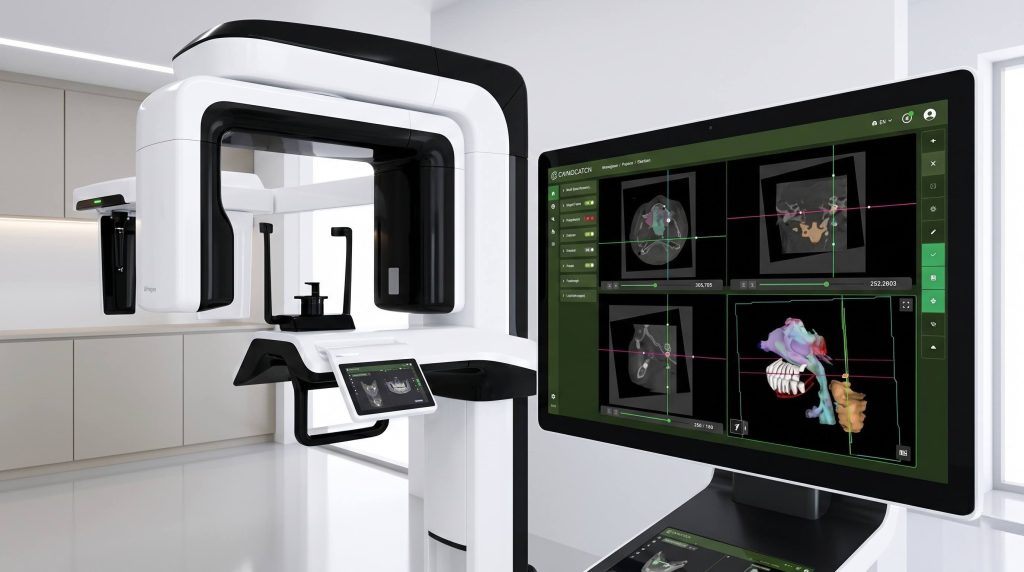
We determine the necessity of a root canal by combining digital radiographs, AI-driven diagnostics, and CBCT 3D imaging. This precise technology stack allows us to detect hidden infections, identify microscopic root fractures, and map complex anatomy before treatment begins.
Many dental offices still rely exclusively on traditional two-dimensional X-rays. While useful, 2D images often superimpose anatomical structures, hiding early-stage infections or microscopic fractures. At Dental Elements, our diagnostic protocol removes the guesswork.
| Technology | Clinical Function | Why It Matters for Root Canals |
| Pearl AI Diagnostics | Second-opinion artificial intelligence that analyzes digital radiographs. | Detects subtle radiolucencies (bone loss/infection) faster and earlier than the human eye. |
| CBCT 3D Imaging | Captures a high-resolution, three-dimensional map of the jaw and teeth. | Reveals hidden 4th or 5th root canals, precise root curvature, and hidden fractures. |
| Digital Apex Locators | Electronic instruments used to measure the exact length of the root canal. | Ensures the entire canal is cleaned and sealed perfectly to the tip, preventing reinfection. |
| PrimeScan Digital Impressions | High-speed optical scanner that captures the exact topography of your teeth. | Replaces messy putty impressions and seamlessly integrates with our CEREC milling unit. |
Do not wait for a minor ache to become a major dental emergency. Secure your diagnostic appointment at our 15th Street clinic by calling 303-309-4093.
Root Canal vs. Extraction Decision Tree
The decision between a root canal and an extraction depends entirely on the structural integrity of the remaining natural tooth. Whenever a tooth can be reliably saved and restored, root canal therapy is the medically preferred, lower-cost, and faster long-term solution.
Our clinical framework for deciding between saving the tooth or removing it follows a strict, evidence-based decision tree:
- Assess Remaining Tooth Structure: Is there enough healthy enamel and dentin to support a permanent crown?
- Yes: Proceed to Endodontic Evaluation.
- No: Recommend Extraction + Dental Implant.
- Evaluate Root Integrity via CBCT: Does the 3D scan reveal a vertical root fracture?
- Yes: Recommend Extraction + Dental Implant. (Fractured roots cannot be saved).
- No: Proceed to Endodontic Evaluation.
- Assess Surrounding Bone: Is the bone level sufficient to support the tooth long-term?
- Yes: Root Canal + CEREC Crown is the primary recommendation.
- No (Severe Periodontitis): Evaluate for Extraction + Bone Grafting.
The Digital Endodontic Workflow
Our digital endodontic workflow utilizes advanced CAD/CAM technology to diagnose, clean, and restore an infected tooth with unprecedented speed. By integrating digital scanning and single-visit milling, we streamline the entire process, drastically reducing your time in the chair.
- 3D Mapping & Diagnosis: We capture a CBCT scan to map the exact number, length, and curvature of your root canals.
- Comfortable Anesthesia: Using advanced delivery techniques, the tooth and surrounding area are completely numbed. You will feel no pain during this procedure.
- Infection Removal: A small opening is made, and the infected pulp, bacteria, and decayed nerve tissue are meticulously removed.
- Disinfection & Sealing: The empty canals are shaped, chemically irrigated, and permanently sealed with a biocompatible material called gutta-percha.
- Digital Impression: We use PrimeScan to capture a 3D optical impression of the treated tooth in seconds.
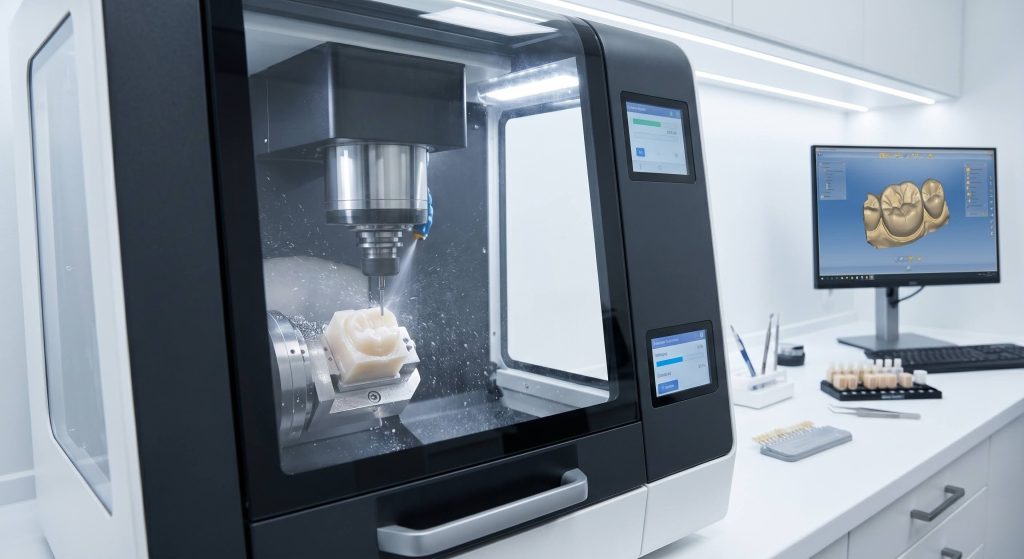
- CEREC Same-Day Crown: While you relax, our in-house CEREC milling machine crafts your permanent, custom ceramic crown. It is bonded into place immediately, completing the restoration.
Root Canal Treatment Timeline
Most root canal procedures are completed in a single visit lasting 60 to 90 minutes. Because we utilize CEREC technology to mill your permanent crown in-house, patients leave our office fully restored on the exact same day.
| Treatment Phase | Traditional Dental Office Timeline | Dental Elements Digital Timeline |
| Diagnostics & Planning | 2D X-Rays | Immediate CBCT 3D Scan & AI Analysis |
| Root Canal Procedure | 1 to 2 Visits (60-120 mins) | 1 Visit (60-90 mins) |
| Restoration Phase | Putty Impressions + 2 Weeks in Temporary Crown | Immediate PrimeScan + Same-Day CEREC Crown |
| Return to Work | Often delayed due to multiple appointments | Same day or next morning |
Root Canal Cost Drivers in Denver
The total cost of a root canal is determined by the anatomical complexity of the tooth, the severity of the infection, and the type of final restoration required. Root canal therapy remains highly cost-effective compared to extracting and replacing a tooth with a dental implant.
| Cost Driver | Impact Level | Explanation |
| Tooth Location (Anatomy) | High | Anterior (front) teeth have one straight canal. Premolars have one or two. Molars (back teeth) have three, four, or sometimes five complex canals, requiring significantly more time and precision to treat. |
| Need for Final Restoration | High | Almost all posterior teeth require a custom crown after a root canal to prevent the hollowed tooth from shattering under bite pressure. |
| Previous Treatment (Retreatment) | Moderate | If a root canal from years ago fails, retreating it requires removing the old sealing material, which adds complexity. |
| Insurance Coverage | Variable | Most major dental insurance plans cover endodontic therapy at 50% to 80% after deductibles are met. |
Myth vs. Fact
- Myth 1: Root canals are extremely painful procedures.
- Fact: The infection causes the pain. Modern root canal treatment, utilizing advanced local anesthesia, eliminates the pain and is comparable to getting a routine filling.
- Myth 2: It is faster and easier to just pull the tooth.
- Fact: While the extraction itself is fast, living with a missing tooth leads to bone loss and shifting teeth. Replacing it with an implant requires surgery and months of healing. Saving the natural tooth is always superior.
- Myth 3: A tooth has to hurt to need a root canal.
- Fact: Chronic infections can slowly destroy the bone around a tooth’s root without causing a single day of pain. We routinely catch these asymptomatic infections using Pearl AI and CBCT imaging.
- Myth 4: Antibiotics can cure a tooth infection.
- Fact: Because the blood supply to an infected tooth is severed, antibiotics cannot reach the bacteria inside the pulp chamber. They only manage the surrounding swelling. The physical tissue must be removed.
- Myth 5: Root canals require multiple long appointments.
- Fact: With the integration of digital impressions and single-visit CEREC milling, the vast majority of our root canals and subsequent crown placements are finished in a single appointment.
From Our Chair
“The anxiety surrounding root canal treatment is entirely based on stories from decades ago. Modern dentistry has completely changed the paradigm. By utilizing CBCT 3D imaging, we remove all clinical guesswork. We can show our patients the exact geometry of their root structure and exactly where the infection resides before we even recline the chair. When you combine that predictability with AI-driven diagnostics and the efficiency of a single-visit CEREC crown, it shifts the experience from anxiety-inducing to highly logical and totally seamless. Our patients frequently tell us they wish they hadn’t waited so long.” — Dr. David Thurman

Denver Lifestyle Scenarios: Why Timing Matters
- The Union Station Commuter: You rely on a tight schedule, commuting via the A-Line. You cannot afford to take multiple days off work for a single tooth. Located right in the Central Business District, our single-visit digital workflow allows you to get your root canal and permanent crown in one session, getting you right back to your routine.
- The LoDo Executive: You have a critical presentation tomorrow, but a sudden, severe toothache is making it impossible to focus. Prompt diagnosis and treatment using our advanced technology will eliminate the pain immediately, ensuring you perform at your best without a temporary crown falling out mid-meeting.
- The Highlands Weekend Athlete: You took a minor impact to the jaw while mountain biking a month ago, and now the tooth is darkening. Early treatment can save the tooth before the necrotic pulp leads to a painful abscess that ruins your upcoming weekend in the mountains.
Frequently Asked Questions
How long does a root canal take? Most root canal procedures at Dental Elements take between 60 to 90 minutes. Complex molars may require slightly more time, but our use of 3D mapping ensures no time is wasted searching for hidden canals.
Will I need a crown after the root canal? Yes, removing the infected pulp weakens the overall tooth structure, making it brittle. We utilize PrimeScan digital impressions and CEREC single-visit milling to create and bond a permanent, custom ceramic crown during the exact same appointment.
Can I drive home afterward?
Yes. Unless you have specifically requested and received oral conscious sedation for anxiety, you will be completely alert and capable of driving yourself home or back to the office immediately after the procedure.
How successful are root canals?
Modern root canal therapy has an exceedingly high long-term success rate, often lasting a lifetime when the tooth is properly restored with a permanent crown and maintained with good oral hygiene.
Is root canal treatment covered by insurance?
Many dental insurance plans provide benefits for endodontic therapy. Our team provides transparent cost breakdowns and will help maximize your insurance benefits prior to beginning any treatment.
Ready to end your tooth pain with a modern, high-tech approach? Contact Dental Elements in Downtown Denver at 303-309-4093 or book online to experience digital dentistry.